

SHOP ALL






Maternity Leggings vs. Maternity Pants: How to Know Which One You Need


There's usually one specific morning that starts this question. You're getting dressed for something that matters a little — a meeting, a doctor's appointment, dinner with people you'd like to look put together for — and the pants you've worn every week for two years won't close. Not tight. Won't close. And the leggings in the drawer feel like the only thing that will work, except they aren't quite right for where you're going.
That gap is the whole question. It isn't really about which piece is better. It's about which one solves the day in front of you.
The short answer: maternity leggings are the piece you'll reach for most, and they're where most women start. Maternity pants are what you need when leggings aren't enough — when you want structure, a more finished look, or something that reads as getting dressed rather than staying comfortable. Most women end up owning both. Very few need both on day one.
Here's how to tell which one you need first.
What maternity leggings are actually built to do
The job of a maternity legging is to disappear. You should be able to put it on and stop thinking about it, which sounds like a low bar until you've spent a day pulling a waistband back up every twenty minutes.
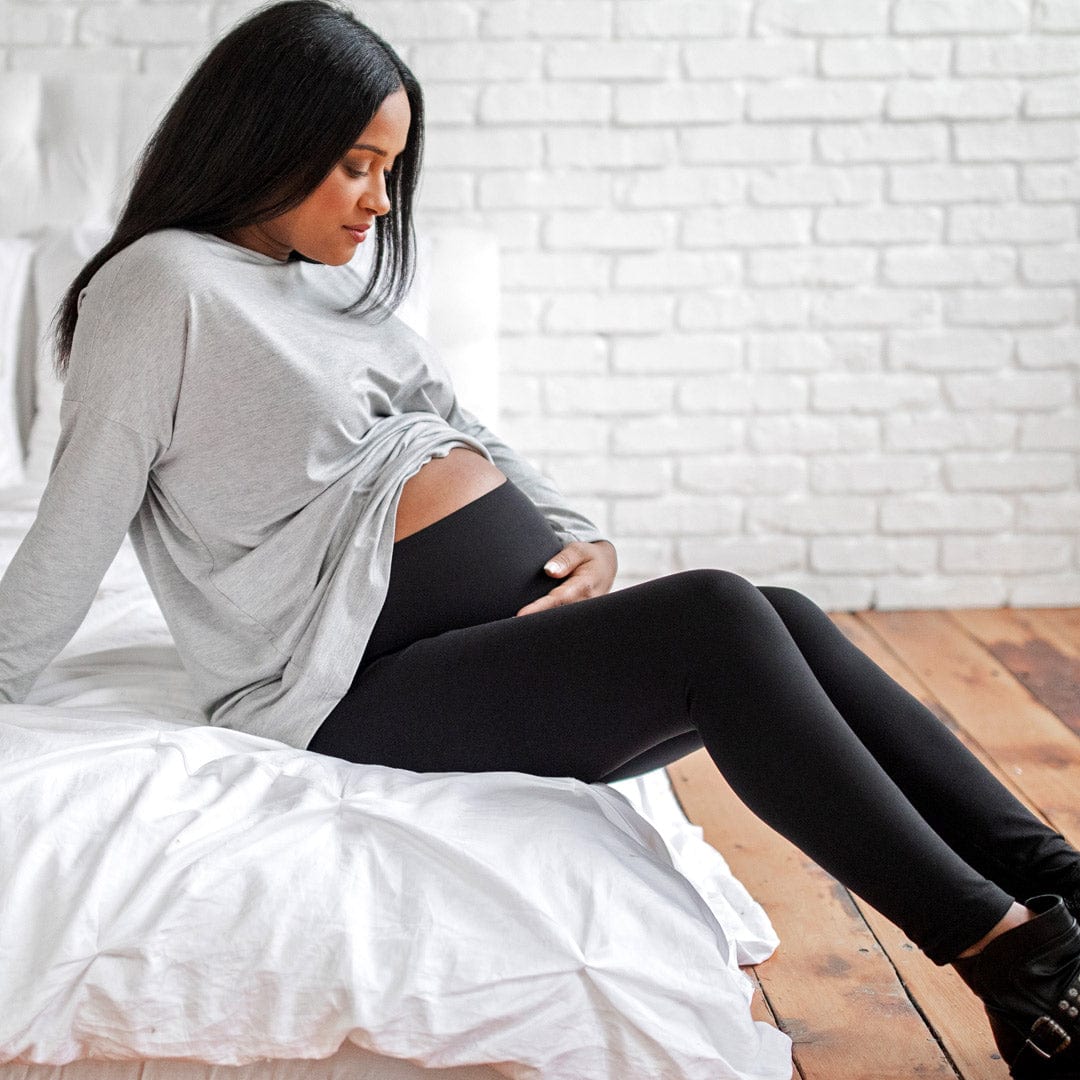
Our Comfy Maternity Leggings do that through three things working together. The supportive belly panel sits over the bump and holds without gripping, so there's no band digging in under your stomach. The non-roll waistband stays where you put it — it doesn't fold down, creep, or need adjusting when you sit. And the four-way stretch means the fabric moves with you in every direction rather than just pulling in one, which is what keeps them from going baggy at the knee by two o'clock.
That combination is why leggings tend to be the first maternity purchase, and why they stay in rotation the longest. They work at twelve weeks when nothing looks different yet, but your regular waistband has started to feel like a bad idea. They work at thirty-six weeks when your body has done everything it's going to do. They work at home, at the grocery store, on the school run, and under a longer top on days you need to look like you tried.
What they don't do is give you structure. There's no crease, no drape, no shape holding itself up. On days when that matters, you'll want the other thing.
What maternity pants do that leggings can't
Maternity pants exist for the version of your life that didn't pause. Work that has a dress code. Family things. Appointments, and errands, and dinners where you'd rather not be in stretch fabric head to toe.
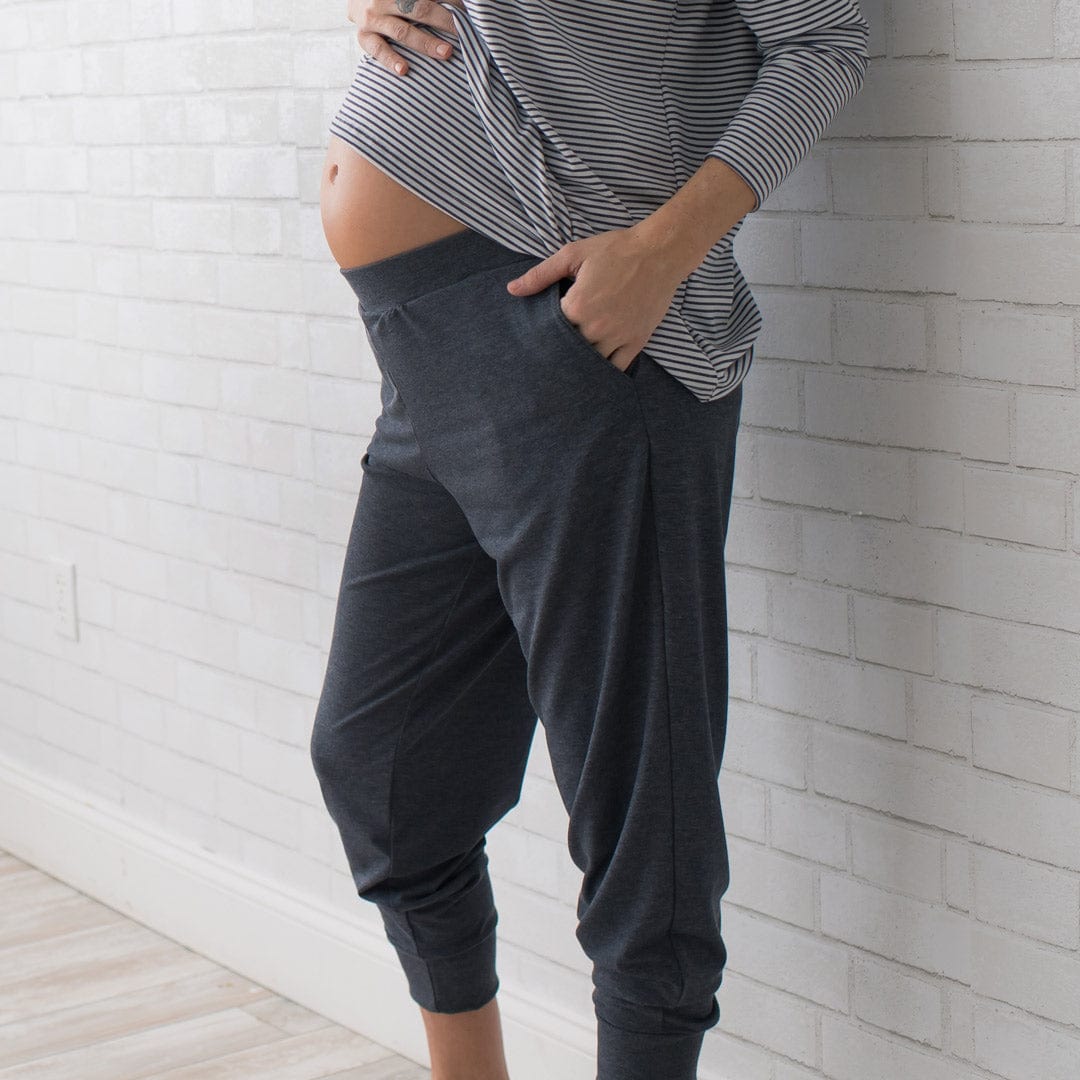
The Mama Maternity Pants are built around a wide comfort waistband that folds — you can wear it up over the bump for full coverage and support, or fold it down to sit under the bump when that feels better. That's one waistband doing two jobs, which matters more than it sounds like it should, because what feels good at fifteen weeks is rarely what feels good at thirty-two. The fabric is a super soft rayon-spandex that holds its shape through a full day of wear, so they read as real pants rather than something with a maternity panel bolted on.
That's the practical difference. Leggings solve comfort. Pants solve comfort without giving up the way you want to look.
How to tell which one you need right now
The clearest way to decide is to look at your actual week rather than your pregnancy.
If most of your days are spent at home, moving between things, working from a laptop, or managing other children, leggings are the right first purchase. You'll wear them more than anything else you buy, and buying them early gives you the longest possible return on the piece.
If you're in an office, seeing clients, teaching, or otherwise in front of people who expect a certain level of put-together, start with the pants. You can get through the early months in your regular clothes with the button undone, but you can't get through a full workday in something you're self-conscious in.
If you're early, first trimester, nothing visible yet, just uncomfortable, leggings are the gentler entry point. Nothing about them announces that you've started buying maternity clothes.
And if you're already in the third trimester, buy both. At that stage you're not building a wardrobe for the long haul, you're solving the next ten weeks, and you'll want one option for comfort and one for everything else.
You can shop the full maternity bottoms collection here if you'd rather see both side by side before you decide.
What size to order
This is where most people overthink it, so the guidance is simple.
Order your pre-pregnancy size. Both pieces are designed to grow with you, and sizing up early usually means a waistband that gapes now and still doesn't fit later. The stretch is doing the work — you don't need to buy ahead of it.
The one exception is if you're already in your third trimester or you know you prefer a relaxed fit. In that case, size up. You'll get more room as your bump grows, and the fit will still be right at the end.
For postpartum, stay true to size. The fabric rebounds. Check our size guide, too.
What happens after the baby comes
Most maternity brands stop being useful the week you give birth. That's the part nobody warns you about — you come home in a body that isn't the one you had before and isn't the one you had last month, and the entire wardrobe you just built stops making sense.
This is the strongest argument for leggings as your first purchase. The same pair that carried you through the second trimester carries you through the fourth. The panel that supported your bump sits comfortably over a healing stomach. The waistband that didn't roll when you were pregnant doesn't roll now. You keep wearing them, which means the cost per wear keeps dropping long after the pregnancy ends.
The pants come back a little later, but they do come back — usually around the point when you start needing to look like a person again, and nothing else in the closet is willing to help.
Why the construction matters more than it seems
There's a reason a waistband either stays put or doesn't, and it isn't the fabric alone. It's how the panel is attached, how the seam is finished, and whether the piece was built to survive being worn three times a week for eight months.
Everything we make is made in the USA, which means we see the construction rather than reading about it in a spec sheet. Waistband tension is consistent between runs. Fabric behaves the same way in the second batch as it did in the first. When something doesn't hold up, we know why, and we fix it before the next production run rather than after the next round of returns.
That's the practical case for domestic manufacturing in maternity specifically. These are clothes worn hard, daily, through a body that changes every few weeks. The difference between a piece that lasts and one that doesn't shows up faster here than almost anywhere else in a wardrobe.
Where to start
If you want one answer: start with the leggings. They're the piece most women buy first, wear longest, and come back for again. Add the pants when your week asks for something more structured, which for most people happens somewhere in the second trimester.
If you're still deciding, start with the Comfy Maternity Leggings or Comfy Maternity Cropped Leggings — they're the easiest first purchase to get right, and the one you're least likely to regret.


