

SHOP ALL






How to Find Maternity Pants That Actually Fit


A guide for every stage — first trimester through postpartum.
Most maternity pants look fine in the product photo. What they don't show you is what happens at twenty-eight weeks, when the waistband starts rolling down every time you sit, or at seven months, when the panel sits just an inch too low and slips all day.
Finding pants that genuinely fit during pregnancy is harder than it sounds — not because good options don't exist, but because most women aren't told what to look for. The fit challenges shift by trimester. The panel style matters more than the marketing copy suggests. And sizing, for this category, works differently than anything in your regular wardrobe.
This guide covers everything, so you can shop with clarity rather than optimism.
What Should Maternity Pants Actually Feel Like?
It sounds like a simple question. But if you've spent any part of pregnancy in pants that dig in, bunch, or leave a red line across your abdomen by noon, you already know the answer isn't obvious.
Good maternity pants should feel like they're working with your body, not just tolerating its changes. That means a waistband that stays where you put it. Fabric that moves with you when you sit, stand, or bend without pulling tight across the belly. And a fit through the hip and thigh that doesn't require a size you'd never otherwise wear.
The most common complaint about maternity bottoms isn't the size — it's the waistband. Rolling, bunching, and slipping are almost always design issues, not fit issues. A waistband built with the right fabric tension and panel height holds its position through movement. One that isn't engineered for this specific use case won't, no matter what size you buy.
Before you shop, it's worth asking a few specific questions: Does the product description mention a non-roll or stay-put waistband design? Is the fabric four-way stretch, or just two-way? Is the panel height described in any measurable way — or just vaguely labeled "belly panel"? These details separate pants built for pregnancy from pants that are simply cut larger.
Over-Bump vs. Under-Bump Panels: What's the Real Difference?
This is the decision most first-time maternity shoppers overthink — and the one that makes the biggest practical difference.
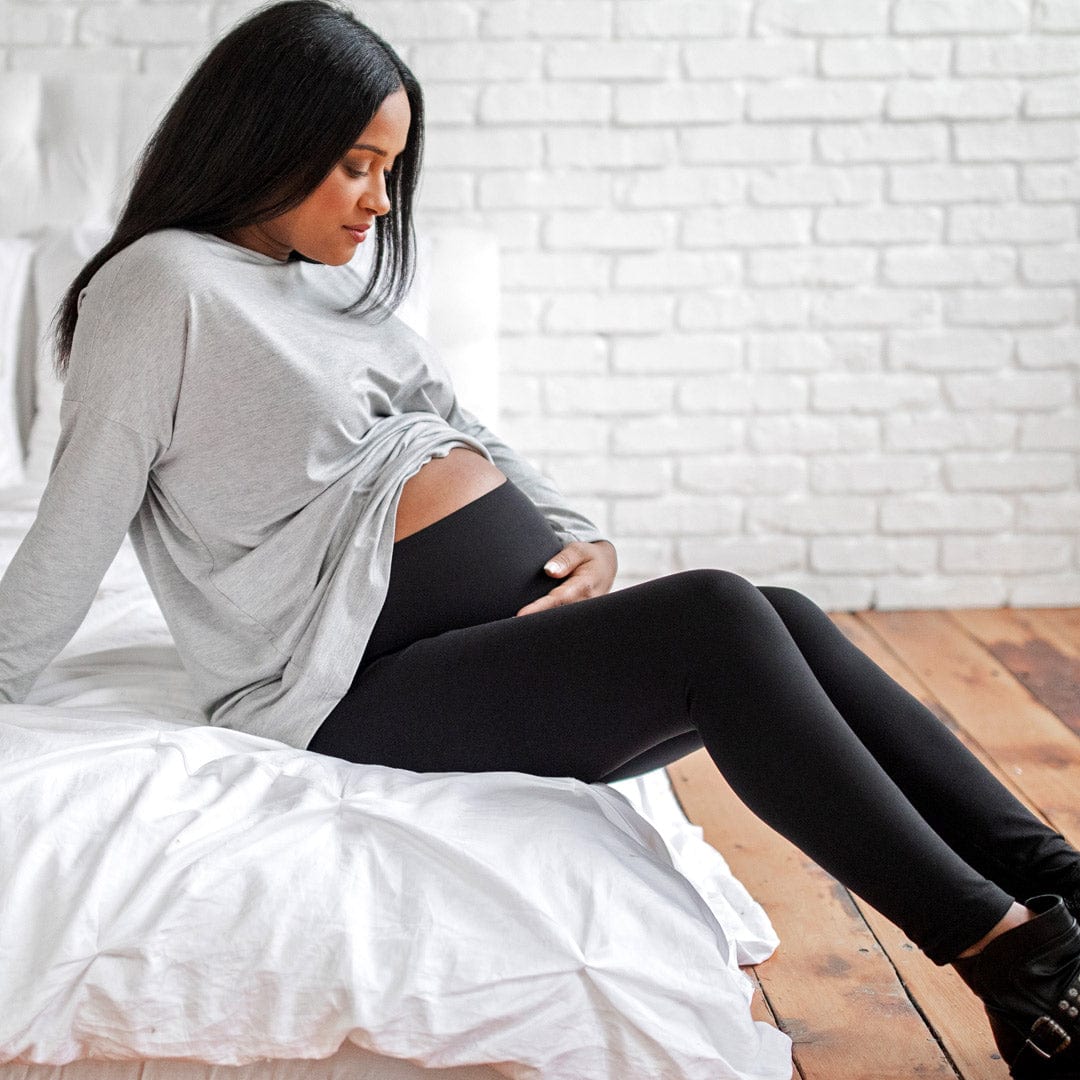
An over-bump panel is a full-belly panel that extends from the hip to just below the bust. It's designed to cover and support the entire bump and is almost always the better choice in the second and third trimesters. When it's well-made, it stays in place, provides real abdominal support, and doesn't create a visible waistband line under fitted tops.
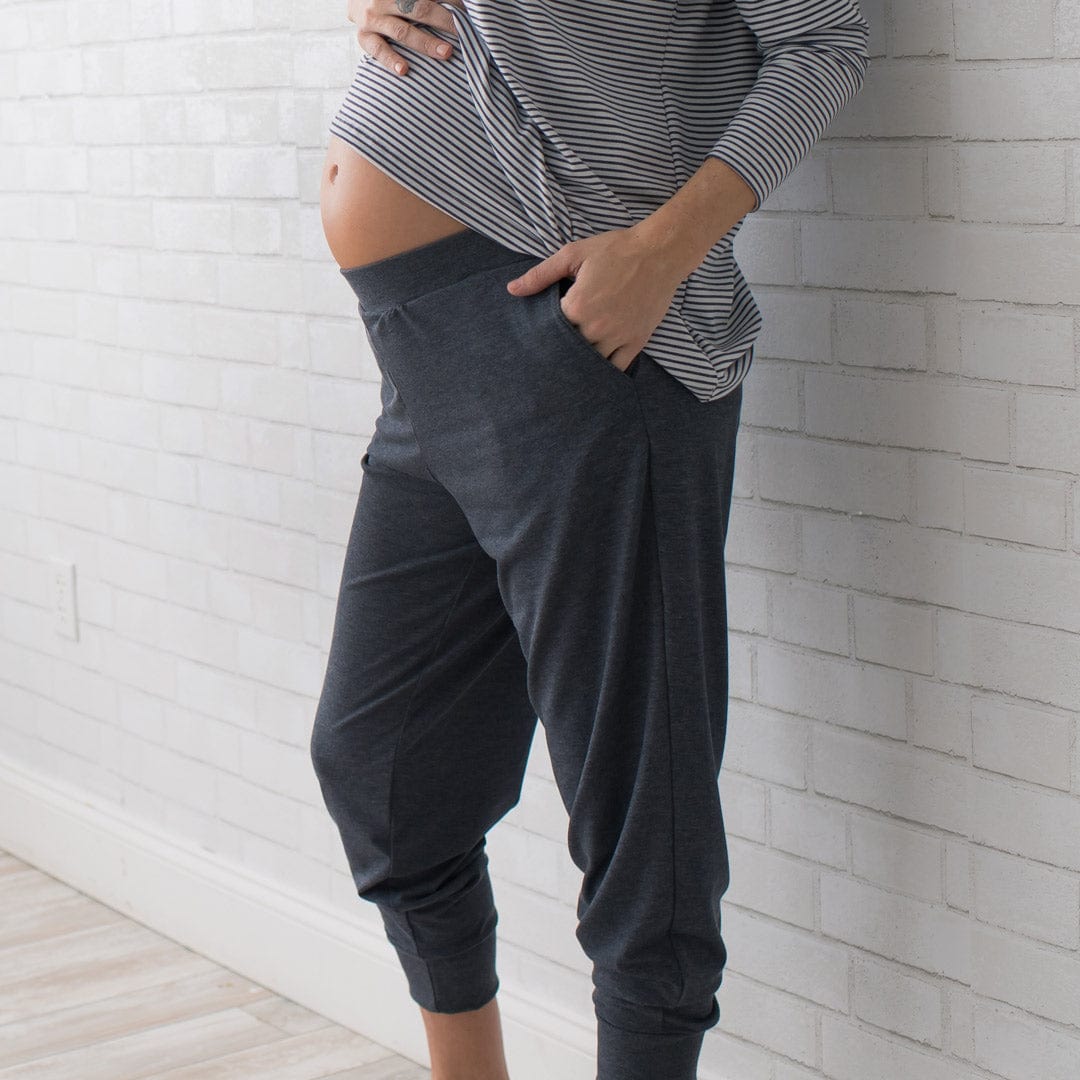
An under-bump panel sits lower on the belly — typically just below the bump — and appears more like a regular waistband from the outside. Some women prefer this style earlier in pregnancy when the bump is smaller, or when they want a more familiar pants silhouette. The trade-off is that it offers less coverage as the belly grows, and it can migrate downward over the course of a long day.
The short answer: if you're buying one pair to carry you through the second and third trimesters, choose over-bump. If you're adding an early-pregnancy option, or if you find full panels uncomfortable, under-bump is a reasonable choice — just look for one with a higher rise and firm, structured fabric that won't sag.
How Does the Fit Change by Trimester?
Pregnancy isn't one static fit situation. Your body changes significantly from the first trimester to the third, and the pants that work well at twelve weeks may not serve you the same way at thirty-two.
First trimester. In the early weeks, most women are between sizes — not yet visibly pregnant, but already starting to feel tighter in the waist and hip. The belly hasn't arrived yet, but the abdomen is often tender and sensitive to pressure. This is usually when the first pair of maternity pants gets ordered, often out of desperation for something that simply doesn't press.
At this stage, an under-bump style or a fold-over waistband often works well. A full over-bump panel can feel excessive before the bump is established, and a lighter waistband gives you the relief you're looking for without excess fabric.
Second trimester. This is when most women get serious about their maternity wardrobe. The bump is visible, sitting and bending feel different, and anything with a rigid waistband has likely already been retired. The over-bump panel earns its reputation here. As the belly rounds and rises, a well-made panel provides a smooth base layer, holds the pants in place, and removes the sensation of anything pressing on your abdomen. This is also when the fabric's stretch becomes critical — four-way stretch accommodates forward and lateral growth without pulling tight across the front.
Third trimester. By the third trimester, comfort is the primary criterion. The bump is large, sleep is difficult, and anything that requires adjustment throughout the day becomes exhausting quickly. A tall over-bump panel that reaches just below the bust provides the most support and security. Panel height matters here — one that ends too low will slip as the belly grows heavier. Fabric weight matters too: light enough to wear all day without overheating, but substantial enough to provide genuine support.
This is also when a good pair of maternity pants doubles as loungewear. If you're working from home or spending more time resting, you want something that transitions from couch to errand without needing to change.
What Fabric Actually Makes a Difference?
The marketing language around maternity fabrics tends toward vague superlatives — "ultra-soft," "incredibly stretchy," "designed to move with you" — that describe nearly every maternity garment on the market. Here's what actually matters.
Four-way stretch means the fabric moves in every direction — horizontally, vertically, and diagonally. This matters because pregnancy movement isn't one-dimensional. When you sit down, you're asking the fabric to accommodate both the forward belly and the lateral hip at once. Two-way stretch handles one axis well; four-way handles all of them.
Recovery refers to how well the fabric returns to its original shape after stretching. A fabric with poor recovery will bag out at the knee and sag in the seat by midday. Good recovery is what keeps maternity pants looking like pants — not worn-out leggings — and it's what allows the same pair to transition into postpartum wearability without losing its shape.
Fabric weight affects both comfort and appearance. Lighter fabrics feel cool and easy but may stretch unevenly under load or show the waistband line through tops. Mid-weight fabrics hold their shape better through the day and drape more cleanly.
Non-roll waistband construction isn't a fabric property — it's an engineering decision. The waistband needs to be cut, sewn, and tensioned so that it lies flat under movement. A fabric that lacks this construction will roll regardless of how premium the material is. This is where the difference between a well-made pair and an inexpensive one tends to show up first.
Do Maternity Pants Work Postpartum?
This is one of the most practical questions to ask before buying — and one that most product descriptions don't answer directly.
The honest answer is: it depends on how the pants are made. Maternity pants designed with postpartum wearability in mind use fabrics with genuine recovery — they stretch to accommodate a pregnant belly and then rebound to fit a body that's no longer pregnant. A waistband engineered for movement, rather than just for size, also translates well to the postpartum stage, when the body is still changing, and nothing feels quite right yet.
Full over-bump panels work particularly well in the early postpartum weeks. They provide gentle abdominal support during recovery, sit comfortably above a c-section incision line when relevant, and remove the pressure of a tighter waistband on a still-tender abdomen.
The pants and leggings you wore in your third trimester are often the most comfortable things to wear for the first two to four weeks after birth — before your body has settled and before you're ready to think about shopping again. This isn't a gap in the product. It's the intended use.
When you're ready to shop postpartum, order your pre-pregnancy size. The four-way stretch fabric adjusts to meet you where you are, and the waistband is designed to fit on both sides of pregnancy. You don't need a new size.
How Many Pairs Do You Actually Need?
Most maternity guides avoid answering this honestly, because the truthful answer is fewer than the shopping lists suggest.
Most women get through pregnancy on two to three pairs of well-made maternity bottoms — worn on repeat, washed regularly, and supplemented by whatever still fits from their regular wardrobe. The temptation to buy more comes from uncertainty: ordering multiple pairs from multiple brands in the hope that something will finally work the way it's supposed to.
If you invest in one pair of well-engineered maternity pants early — fabric that behaves, a waistband that stays, a silhouette that works for your life — you'll likely buy fewer overall. Add a pair of leggings for evenings, rest days, and the early postpartum weeks, and you have the foundation of a functional maternity wardrobe.
If you're not sure where to start, start with the pants. Get that fit right first, then build from there.
What Makes Made-in-the-USA Maternity Clothing Different?
There are practical reasons beyond values to choose maternity clothing made domestically — and they're relevant specifically to this product category.
Domestic production allows for tighter quality control over fabric sourcing, cut consistency, and finishing. For a garment where the waistband construction is the most critical variable — where small inconsistencies in tension or seaming can mean the difference between a panel that stays and one that rolls — the standards applied at the manufacturing stage matter more than in most other garment categories.
It also affects how the fabric behaves over time. A four-way stretch material cut and sewn to close tolerances will maintain its recovery through repeated washings. One that isn't may lose shape within a few wears, which is the last thing you need when you're dressing a body that's changing every week.
Tupelo Honey Maternity is made in the USA — not as a positioning statement, but as a reflection of how these pieces are made and what they're made to do. The non-roll waistbands, the four-way stretch, the fabric recovery that carries through postpartum — these are outcomes of how the garments are constructed, not just what they're made from.
The Right Pair Is the One You Reach for Every Day
The best maternity pants aren't the ones with the most features listed in the description. They're the ones you put on in the morning without thinking, wear through whatever the day asks of you, and don't adjust once.
That standard is achievable. It just requires knowing what to look for — which is what this guide was designed to give you. Start with the waistband. Look for four-way stretch and genuine recovery. Choose your panel style based on your trimester and your preference. And order your pre-pregnancy size.
The rest tends to follow.
Tupelo Honey Maternity is made in the USA with fabrics built to grow with you — and stay with you after.


