

SHOP ALL






What to Wear to Sleep During Pregnancy (And Why It Matters More Than You Think)


Sleep during pregnancy is its own kind of unpredictable. Some nights are restless. Others are short. And even when sleep does come, it often feels lighter or less restorative than it used to.
What you wear matters more than most people expect.
When your body is already doing so much — growing, shifting, regulating — the last thing you need is clothing that adds friction. The right sleepwear won't fix disrupted nights entirely, but it can remove a layer of discomfort that you might not even realize is there until it's gone.
Why Pregnancy Changes How Clothing Feels
Your body's relationship with fabric shifts during pregnancy in ways that can catch you off guard.
You may find yourself more sensitive to seams, elastic, and pressure around your midsection. You might run warmer than usual, or experience temperature swings through the night. Positions that once felt natural become harder to settle into, which means you're adjusting and readjusting more than before.
Clothing that worked just fine before pregnancy — even soft, comfortable clothing — can start to feel distracting once your body is doing the work of growing a baby.
None of this is unusual. It just means that sleepwear is worth thinking about more carefully.
What Comfortable Maternity Sleepwear Actually Needs
There's no single style or silhouette that works for everyone. But the qualities that make sleepwear genuinely comfortable during pregnancy tend to be consistent.
Softness that's immediate
When you're tired, your tolerance for discomfort drops. Sleepwear should feel soft the moment you put it on — not after a few washes, not once it warms up. If something feels even slightly scratchy or stiff at bedtime, that sensation tends to amplify overnight rather than fade.
Look for fabrics that feel gentle against skin that may be more sensitive than usual. Soft cotton, cotton-spandex blends, and rayon-spandex fabrics tend to work well. Flat seams and minimal construction details help too.
Stretch without restriction
Pregnancy bodies need room to move, even during rest. Waistbands that press into your belly, or tops that feel snug across your ribs, can make it harder to settle into a comfortable position — and harder to stay there.
Four-way stretch fabrics move with you rather than resisting you. A non-roll, non-binding waistband supports without constraining. These aren't features you notice when everything is going right. You notice them when they're missing.
Breathability through the night
Many people run warmer during pregnancy. Sleepwear that traps heat — heavy fabrics, thick layers, materials that don't breathe — can make it harder to stay comfortable through the night.
Lighter, breathable fabrics help your body regulate temperature more easily. This is especially relevant in the second and third trimesters, when temperature sensitivity tends to increase.
The Sleepwear-Loungewear Overlap
During pregnancy, especially in the later months, the boundary between sleepwear and daywear often blurs — and that's not a problem to solve. It's something to lean into.
On low-energy days, you may rest for much of the morning, move slowly around the house, and not feel ready to change until late in the day (or not at all). Versatile pieces that work for sleep and for light daytime wear remove one small decision from a day when energy is already limited.
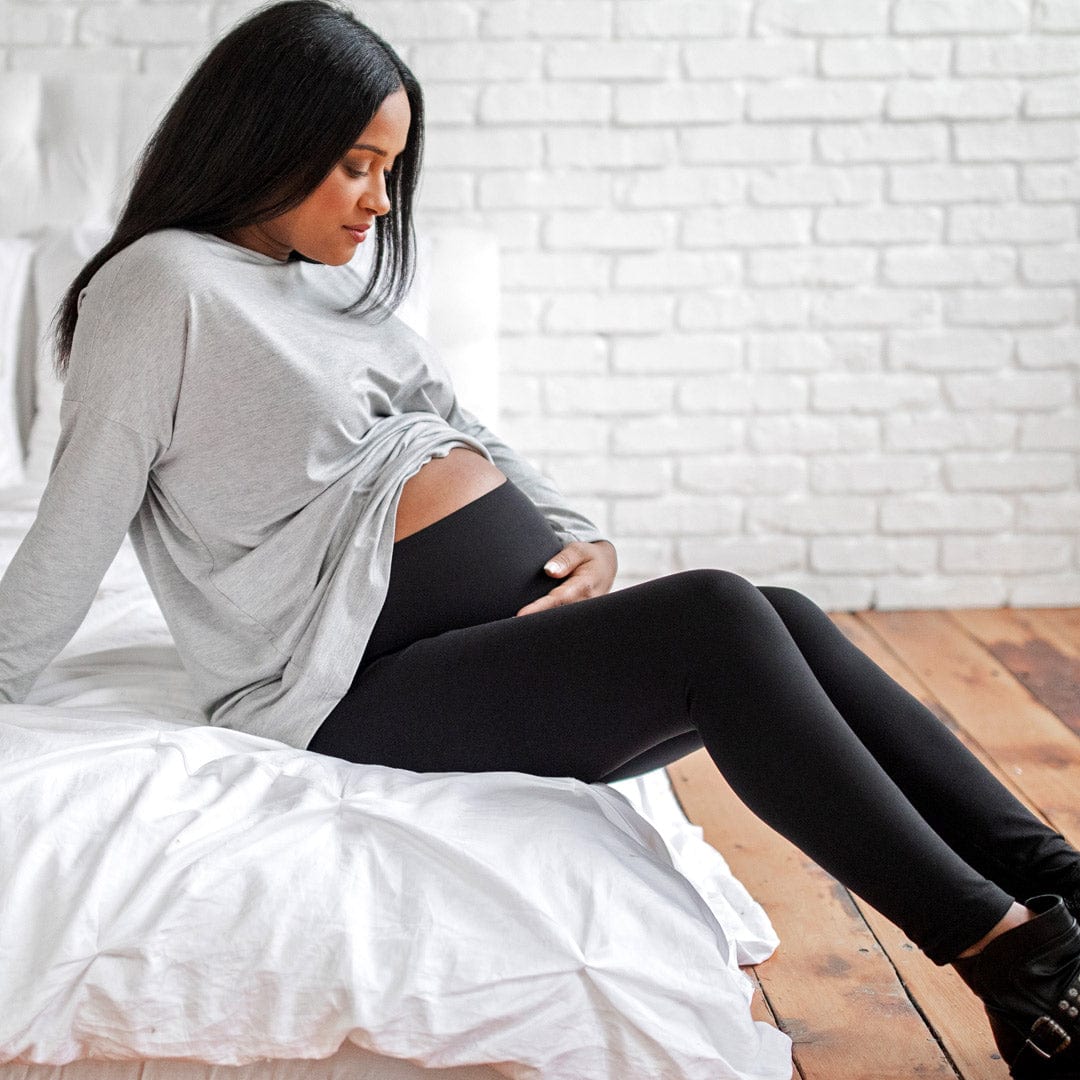
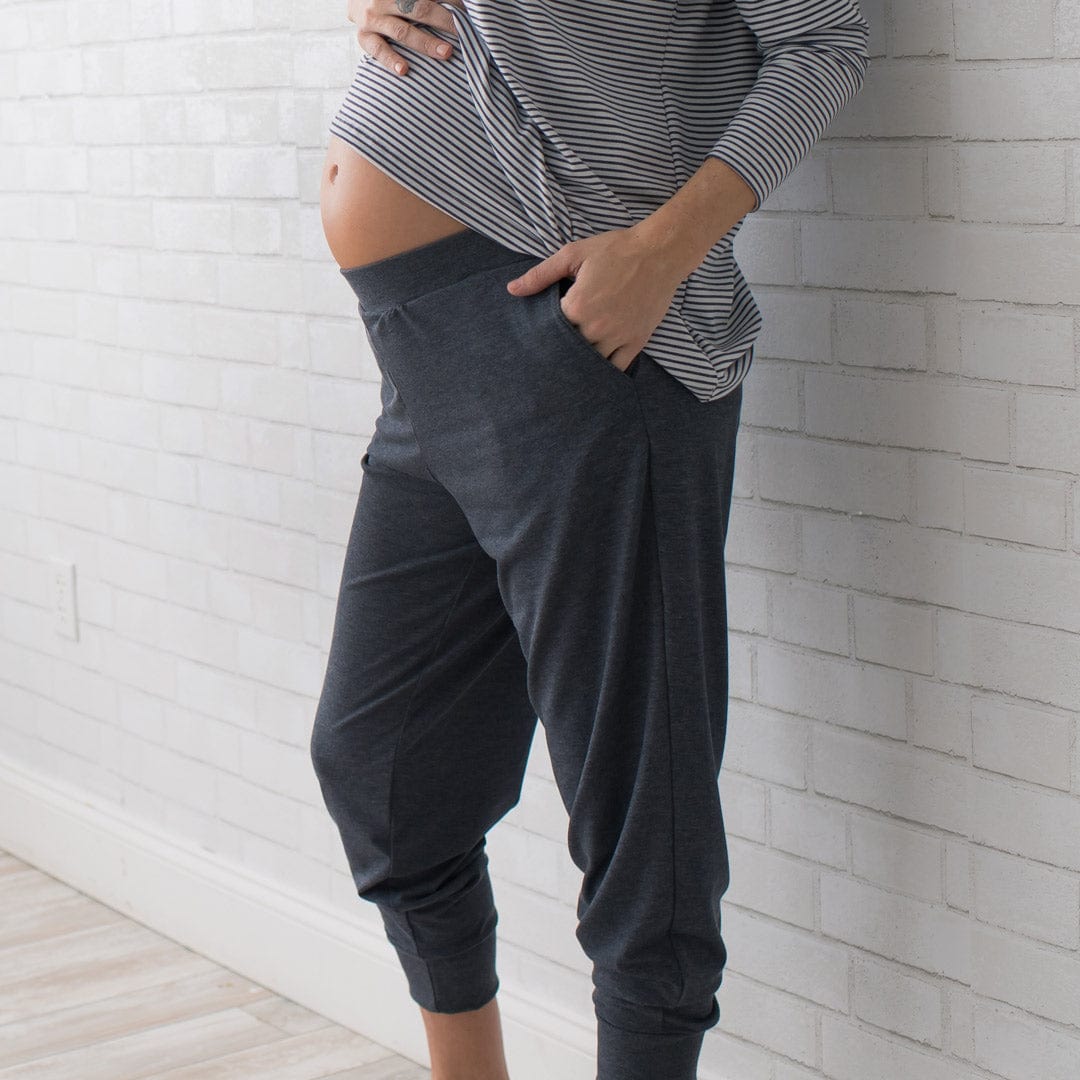
Soft maternity leggings with a supportive waistband are a good example. So is a relaxed maternity top or a loose, breathable sleep set that doesn't feel strange to wear while making tea or sitting on the couch. When you're managing fatigue, that flexibility is genuinely useful.
What to Look For — and What to Avoid
A few things that tend to make sleep harder during pregnancy: tight or digging elastic around the belly or lower ribs, stiff or rough fabrics that need time to soften, heavy layers that trap heat, and anything with buttons, zippers, or thick seams that press into the body when you lie down.
What tends to help: soft stretchy fabrics that move with the body, low-profile or bump-friendly waistbands, breathable materials in lighter weights, and simple silhouettes without extra hardware or bulk.
If you're waking up to adjust your clothing, it's worth paying attention to that signal.
A Note on Postpartum Comfort
Many of the same qualities that make sleepwear comfortable during pregnancy continue to matter in the weeks after birth.
Your body is still changing. Sleep is still fragmented. And if you're nursing, easy access becomes its own consideration.
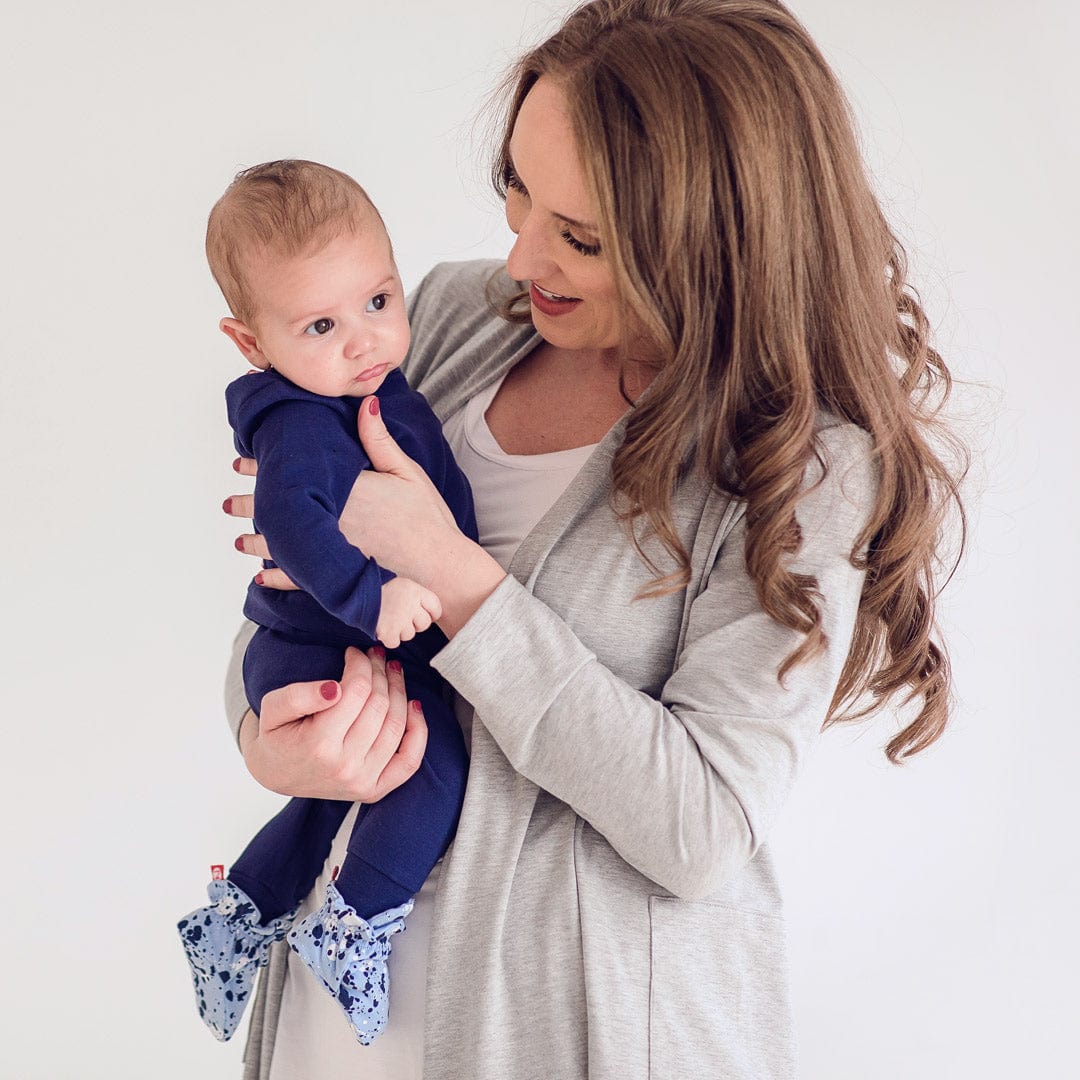
Fabrics that are soft and stretchy, waistbands that don't bind, tops that allow for nursing access — these aren't separate postpartum needs. They're an extension of the same comfort-first approach that serves you well throughout pregnancy. Pieces that work across both stages are worth investing in.
The Quiet Value of Comfortable Clothing
Good sleepwear doesn't announce itself. That's the point.
When your clothing is working — when it's soft, when it moves with you, when it doesn't press or pull or scratch — you stop noticing it. And during pregnancy, when there's already so much to notice and manage, that kind of quiet reliability matters.
No piece of clothing can make fragmented sleep feel restorative. But removing small sources of discomfort can make rest feel a little easier to settle into — and a little easier to stay in, even when sleep comes in short stretches.


